


How to Buy Land and Subdivide It for Profit
Table of Contents
- Introduction
- Land Scams on the Rise: Protecting Yourself From Scammers
- How to Avoid Scams and Ensure Payment Security When Selling Land
- Ready, Set, Sell!
- Listing Your Land: Finding the Right Buyer
- The Fast Track to Selling Your Land: Selling to a Land Investor
- The Closing Stretch: Sealing the Deal from Out-of-state
- Conclusion
Land investing is becoming one of the most strategic and scalable real estate plays of the decade, and the numbers support that claim.
In 2024, farm real estate (which includes both land and structures) was valued at a projected $3.52 trillion, making up over 83% of total U.S. farm assets, according to the USDA’s Farmland Value Report. The average per-acre value of U.S. farmland rose to $4,170, a 5% increase over 2023. This isn’t a short-term spike. From 2018 to 2023, farmland posted a compound annual growth rate of 5.1%, reflecting strong, steady appreciation even after adjusting for inflation.
But what’s proving even more profitable than just holding land long-term? Buying it, then subdividing it into smaller, sellable lots.
This approach, particularly through minor subdivisions, offers the potential for higher per-lot profits, more flexible resale options, and shorter turnaround times without the complexity or cost of major developments.
In this guide, you’ll learn exactly what a minor subdivision is, why it works, and how to use it to build value into your land deals step by step.
What Is a Minor Subdivision?
A minor subdivision is the legal process of dividing a single parcel of land into a small number of new lots, typically fewer than five. The specific threshold that defines a “minor” versus a “major” subdivision varies widely depending on the county or state. This process is regulated by local zoning and subdivision ordinances.
Example of thresholds by location:
Jurisdiction | Minor Subdivision Threshold | Key Conditions | Source |
Maricopa County, AZ | ≤ 5 lots | No new public infrastructure (roads/sewers) required | |
Monroe County, FL | ≤ 4 new lots | Creates 4 or fewer lots from one parcel | |
Sonoma County, CA | ≤4 lots | Often requires strict septic/health dept approval |
Why Thresholds Matter: Exceeding your county’s lot limit or missing conditions (e.g., needing a new road) forces you into complex “major subdivision” territory—adding years, costs, and regulatory headaches.
Distinction from Major Subdivisions: Major subdivisions involve creating many lots (often 6+) and usually mandate installing new infrastructure like roads, sewers, and utilities – a complex, costly, multi-year process requiring significant capital and deep expertise. Minor subdivisions generally avoid this heavy lift.
The benefits of minor subdivisions are compelling, especially for new and experienced investors alike:
- Lower Capital Investment. You’re not building an entire neighborhood, so your upfront costs are significantly reduced. Initial investment focuses on land purchase, surveys, engineering, and fees.
- Reduced Complexity and Regulatory Hurdles. The approval process is generally simpler and faster compared to major developments.
- Quicker Turnaround Time for Profit Realization. Less complexity means you can often complete the subdivision and sell your new lots much faster. In some areas, preliminary plat reviews for minor subdivisions might target 60 days, though the full process can extend longer depending on local backlogs and complexity.
- Accessibility for Newer Investors. Its manageable scale makes minor subdivision a fantastic entry point into land development.
The key takeaway here is manageability coupled with significant profit potential. You’re creating more value from less initial effort.
Why Split Land? The Profit Potential
So, why go through the effort of splitting land when you could just sell the original parcel? Because subdivision creates value. It’s a fundamental principle of real estate: smaller, more manageable lots often command a higher price per acre than a large, undivided parcel.
Consider this example: Imagine you purchase a 10-acre parcel of raw land for $150,000. If that land is properly zoned and suitable for a minor subdivision, you might be able to split it into four 2.5-acre lots. Even if each of those smaller lots sells for $60,000 individually, you’ve just turned a $150,000 investment into $240,000 in gross revenue, before accounting for your subdivision costs. This demonstrates how subdividing can significantly increase the total market value of your land.

Studies suggest that land development projects, when managed efficiently, can yield profit margins ranging from 10% to 30%, with some experts aiming for a “sweet spot” of 16-20% net return on development cost.
You’re right to highlight that minor subdivisions aim to simplify the process. The distinction is crucial: while a minor subdivision is technically a ‘land development project‘ because it creates new, more valuable parcels, it deliberately bypasses the extensive infrastructure construction and multi-year timelines associated with major developments.
The ‘development stuff’ you might be thinking of – massive road networks, new utility plants, sprawling housing projects – is typically reserved for major subdivisions. Minor subdivisions focus on efficiently dividing existing parcels, leveraging current infrastructure or requiring only minimal additions, making them a far less complex undertaking. These attractive profit margins apply to this streamlined form of land development as well.
Beyond just the direct sale, subdivision creates multiple exit strategies. You could:
- Sell all the newly created lots to individual buyers or builders.
- Sell a few lots to recoup your initial investment and hold onto the remaining ones for future appreciation.
- Build custom homes on one or more of the lots yourself, further increasing profit.
Utilize tax advantages related to land development and potentially benefit from increased equity in your assets as the market value of your subdivided parcels grows.

We are very pleased with the fair offer we received from Acrewell Land Company for our land. Alexander Reese and Marilag walked us through all aspect of the selling process, which made us feel more comfortable that we were making the right choice. I fully recommend this company to anyone who is considering selling their property to Acrewell.
I am absolutely delighted to write a glowing review for Acrewell's recent land purchase from us. The entire experience of transitioning the land ownership was incredibly smooth and efficient, thanks to Acrewell's exceptional professionalism and clear communication throughout the process.
Acrewell is awesome! I love the weekly updates. Marilag was very professional. She genuinely cared that my needs were met and questions answered. This has been a very easy transition. I highly recommend Acrewell.
Step-by-Step: How to Buy Land and Split It
Ready to know the process? Here’s a step-by-step guide to navigating a minor subdivision.
1. Find the Right Property
This is where your journey begins. You’re not just looking for any land; you’re looking for land with subdivision potential. Pay close attention to:
- Zoning: This is most important. Does the current zoning allow for the density you propose? What are the minimum lot size requirements?
- Road Frontage: Each new lot will need legal, adequate access. This typically means each lot must have a certain amount of direct frontage on a public road or an approved private road/easement. Minimum frontage requirements vary widely by local ordinance across the U.S., commonly ranging from 50 feet for residential lots in some areas to over 100 feet for lots on certain county roads.
- Why road frontage matters? Road frontage is a significant limiting factor because it directly dictates how many new, separate parcels you can create. If you have a long, narrow parcel with only a small amount of road frontage, you might only be able to create one or two lots, regardless of the overall acreage.
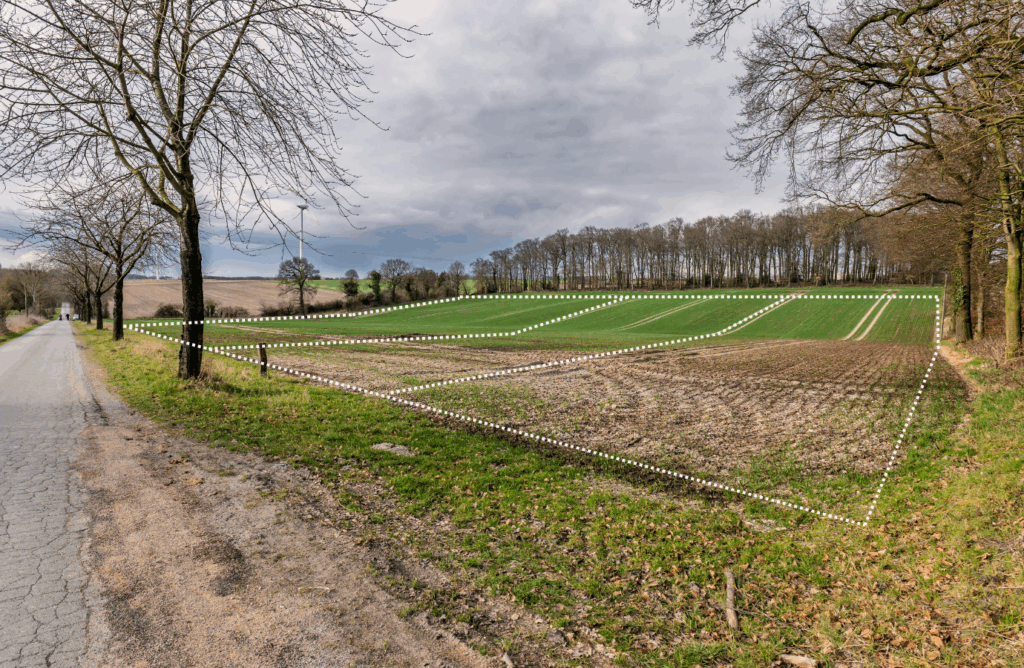
Local regulations often mandate minimum frontage per lot to ensure adequate access for emergency services, utility connections, and to manage traffic flow. Without sufficient frontage, you might have to create a private access road or a “flag lot” (a lot shaped like a flag on a pole, with the ‘pole’ being a narrow strip providing access to the road), which can be more complex, costly, and sometimes restricted or entirely prohibited by local zoning.
- Why road frontage matters? Road frontage is a significant limiting factor because it directly dictates how many new, separate parcels you can create. If you have a long, narrow parcel with only a small amount of road frontage, you might only be able to create one or two lots, regardless of the overall acreage.
- Zoning: This is most important. Does the current zoning allow for the density you propose? What are the minimum lot size requirements?
- Utilities: What’s available? Water, sewer (or septic feasibility), electricity, and gas are vital.
- Topography: Flat land is generally easier and cheaper to subdivide than steep or heavily wooded terrain.
- Utilities: What’s available? Water, sewer (or septic feasibility), electricity, and gas are vital.
Tools you can use: Become familiar with your local county or city’s GIS maps, zoning maps, and planning department resources. These are invaluable for initial research.
2. Check Local Subdivision Rules
This step is non-negotiable. Before you buy, you must understand the specific rules governing subdivisions in your target area.
- Where to look up subdivision codes: Start with your local city or county planning department’s website. Look for “subdivision ordinances,” “zoning codes,” or “land development regulations.”
- What questions to ask the planning or zoning department: Don’t be afraid to call or visit. Ask about the minor subdivision process, typical timelines, required permits, and any specific challenges in that area.
- Understanding lot size minimums, frontage, and access requirements: These will dictate how many lots you can create and how they must be configured.
- Where to look up subdivision codes: Start with your local city or county planning department’s website. Look for “subdivision ordinances,” “zoning codes,” or “land development regulations.”
3. Run the Numbers
Don’t let the potential profits blind you; a detailed financial analysis is critical.
- Cost breakdown: Account for every expense: the land purchase price, surveyor fees, civil engineering fees, application and permit fees (local, county, state), potential utility connection fees, and recording fees.
- Resale value projections: Research comparable sales of subdivided lots in the area to accurately estimate what your new parcels will sell for. The median lot value for single-family detached homes in the U.S. reached $58,000 in 2023, reflecting ongoing demand and lot shortages.
- Holding costs and timeline risks: Factor in property taxes, insurance, and any loan interest during the approval process. Delays can eat into your profits, so build in a buffer.
- Cost breakdown: Account for every expense: the land purchase price, surveyor fees, civil engineering fees, application and permit fees (local, county, state), potential utility connection fees, and recording fees.
4. Get a Survey and Draft a Plat
Once you’ve identified a promising property and confirmed feasibility, it’s time to get technical.
- Hiring a surveyor or civil engineer: These professionals are important. A land surveyor will accurately map the property and propose new lot lines. A civil engineer may be needed for site plans, drainage, and utility design.
- Preliminary vs. final plats: You’ll typically submit a preliminary plat first, which is a conceptual drawing. Once approved, a detailed final plat will be prepared for official recordation.
- Importance of easements, access roads, and utility lines: Make sure all new lots have legal access and clear pathways for utilities, either existing or proposed.
- Hiring a surveyor or civil engineer: These professionals are important. A land surveyor will accurately map the property and propose new lot lines. A civil engineer may be needed for site plans, drainage, and utility design.
5. Submit for Approval
This is where your vision gets official recognition.
- How minor subdivision approvals typically work: You’ll submit your final plat and all required documentation to the local planning department.
- Who reviews the plat: This could be the planning board, zoning staff, or a designated review committee. Public hearings may also be required, depending on local rules.
- How long approvals usually take: Be prepared for a bureaucratic process. Timelines vary widely by location. In some areas, the entire subdivision process, from survey to new title issuance, can take anywhere from 6 months to 2 years or more in complex situations.
- How minor subdivision approvals typically work: You’ll submit your final plat and all required documentation to the local planning department.
6. Record the New Lots
Congratulations, you’ve reached a major milestone!
- Once approved: how to officially split the parcel: The approved final plat is recorded with the county recorder’s office. This legal act officially creates your new, separate parcels.
- How new parcels get new APNs (Assessor Parcel Numbers): Each newly created lot will be assigned its own unique Assessor Parcel Number, which is important for property taxes and future transactions.
- Once approved: how to officially split the parcel: The approved final plat is recorded with the county recorder’s office. This legal act officially creates your new, separate parcels.
7. Sell or Build
With your new lots officially created, it’s time to capitalize on your investment.
- Marketing subdivided lots for sale: Highlight the unique features of each lot, such as views, access, or buildability.
- Options:
- Sell to builders – Many home builders are actively looking for ready-to-build lots.
- Sell to individual buyers – Market directly to people looking to build their dream home.
- Hold for appreciation – If the market is rising, you might consider holding onto the lots for a period to maximize your return.
- Develop yourself – If you have the capital and expertise, you could build on one or more of the lots for even greater profit.
- Marketing subdivided lots for sale: Highlight the unique features of each lot, such as views, access, or buildability.
Potential Pitfalls and How to Avoid Them
Here are broader challenges and solutions and how to best avoid them:
A. Ignorance of Local Regulations – This is the biggest killer of subdivision projects.
Solution: Conduct thorough due diligence by directly engaging with local planning and zoning departments. For a comprehensive guide, refer to our Due Diligence Guide.
B. Underestimating Costs – Unexpected expenses can quickly erode profits.
Solution: Create a detailed budget with line items for every conceivable cost, and always include a 10-15% contingency fund to absorb unforeseen issues.
C. Market Misjudgment – Investing in a location with no demand for new lots is a recipe for disaster.
Solution: Perform comprehensive market research on comparable lot sales and local growth trends. Land values are strongly influenced by factors like proximity to growing areas and infrastructure.
D. Environmental Surprises – Discovering wetlands, protected species, or contamination after purchase can halt your project.
Solution: Get early environmental assessments and surveys done as part of your due diligence.
E. Lack of Access/Utilities – If your proposed lots can’t connect to services, they’re unsellable.
Solution: Verify availability and cost upfront with utility companies and confirm legal access to all new parcels.
F. Timeline Delays – Bureaucracy moves slowly.
Solution: Factor in buffer time for every stage of the approval process. While preliminary plat reviews might be quicker, the full process including survey approval, local government clearances, and new title issuance can take months to over a year.
Final Thoughts: Your Path to Land Profit
Minor subdivisions offer a smart, scalable strategy for land investors looking to maximize their returns. By taking a larger parcel and thoughtfully dividing it into smaller, more desirable lots, you’re not just selling land; you’re creating value and multiple avenues for profit. Studies indicate that even minor changes in land layout can result in a 2% increase in market value, demonstrating the direct impact of subdivision.
Remember, it all starts with meticulous due diligence and a deep understanding of local regulations. Arm yourself with knowledge, build a strong team, and carefully plan your project. The opportunities in land subdivision are vast for those willing to learn and execute effectively.
Ready to embark on your land investment journey? Download our free Due Diligence Checklist to get started on the right foot, then start looking for your first “split” opportunity, and imagine the possibilities!
Connect With Us
Please fill out the form below and we’ll be in touch.
Table of Contents
Post Categories
Latest Posts

Thinking about buying and splitting land for profit?
Need expert insights? Fill out the form below to connect with a specialist.